Miriam’s journey with AI has taught her that the technology is most powerful when it sharpens human judgment, not when it replaces it. The deeper lesson is clear: AI can speed up thinking, widen access to knowledge, and open new creative paths, but it needs human values, patience, and moral clarity to become truly useful.
I didn’t come to AI as someone looking for a shortcut. I came to it with questions. What happens to the human spirit when machines can write, speak, reason, teach, and create beside us? What do we protect? What do we change? What do we refuse to hand over?
The Beginning Was Curiosity, Not Certainty
My first real encounters with AI felt strange in the way all turning points feel strange. There was excitement, yes, but also a quiet discomfort. I could see the power immediately. I could also see how easy it would be for people to mistake speed for wisdom.
That tension has stayed with me. AI can produce a page in seconds, but it can’t carry the weight of a lived life. It can summarize grief, but it doesn’t grieve. It can suggest a path, but it doesn’t walk it. That difference matters.
So my journey began with a decision: I would not treat AI as a toy, a threat, or a miracle. I would treat it as a tool that deserved discipline.
Lesson One: AI Reflects the Person Holding It
One of the first things I learned is that AI often mirrors the intent behind the prompt. If I come to it scattered, it gives me scattered results. If I come to it with care, context, and a clear purpose, it becomes far more useful.
This changed how I think about intelligence itself. Good output doesn’t begin with the machine. It begins with the person asking the question.
That lesson pushed me to slow down. Before asking AI to help me write, plan, teach, or solve, I now ask myself what I’m really trying to do. Am I trying to serve someone? Am I trying to understand something? Am I trying to avoid the hard work of forming my own view?
AI can answer quickly, but the human must decide what is worth asking.
Lesson Two: Technology Without Values Drifts
The more time I spent with AI, the more I understood that ethical innovation can’t be treated as a side topic. It has to sit at the center.
A system can be accurate and still be harmful. It can be efficient and still be unfair. It can sound kind and still flatten the complexity of a person’s story. This is why moral clarity matters. Not as decoration. As direction.
Inside the Fierce Ecosystem, I’ve found language for something I already felt deeply: technology should be guided by heart. That doesn’t mean soft thinking. It means responsible thinking. It means asking who benefits, who is left out, who is being seen, and who is being reduced to data.
Lesson Three: AI Can Help Us Learn, But It Can’t Care For Us
Education may be one of the most meaningful places for AI to serve. I’ve seen how it can explain a hard idea in plain words, help someone practice a skill, or give a learner another way into material that once felt closed off.
That matters. Access matters. A patient tutor at any hour can change a student’s confidence. A tool that helps a teacher prepare better resources can give time back to the classroom. Used wisely, AI can make learning feel less lonely.
But care is not the same as explanation. Students need more than answers. They need encouragement, accountability, culture, and belonging. They need adults and peers who see them as whole people. AI can support that work, but it can’t replace the human bond at the heart of education.
Lesson Four: Creativity Is Not Dead, It Is Being Tested
I understand why artists, writers, musicians, and storytellers feel uneasy. I’ve felt it too. When a machine can generate something polished in seconds, it forces a painful question: what makes human creativity valuable?
My answer has changed over time. I no longer believe the value of creativity lives only in the final product. It lives in the wound, the memory, the stubborn revision, the taste, the risk, the reason something had to be made at all.
AI can assist the process. It can help draft, remix, sketch, organize, and test ideas. But it cannot replace the human need to make meaning from experience. If anything, it asks us to become more honest about what we’re trying to say.
Working With AI Changed My Own Habits
On a practical level, AI has made me more organized. I use it to sort thoughts when my mind feels crowded. I use it to test whether an idea is clear. I use it to explore questions from angles I may have missed.
But I’ve also learned to keep boundaries. I don’t accept everything it gives me. I read closely. I check facts. I listen for language that sounds too smooth or too empty. I bring the work back into my own voice.
That last step is everything. If I let AI sand down the edges of my thinking, I lose the very thing I came to protect. My voice carries my values. My values carry my responsibility.
The Intelligent Mind Is Still Human
When I think about Intelligent Mind, I don’t think only about technical ability. I think about discernment. I think about the courage to pause before adopting whatever is newest. I think about the wisdom to build tools that serve people rather than train people to serve tools.
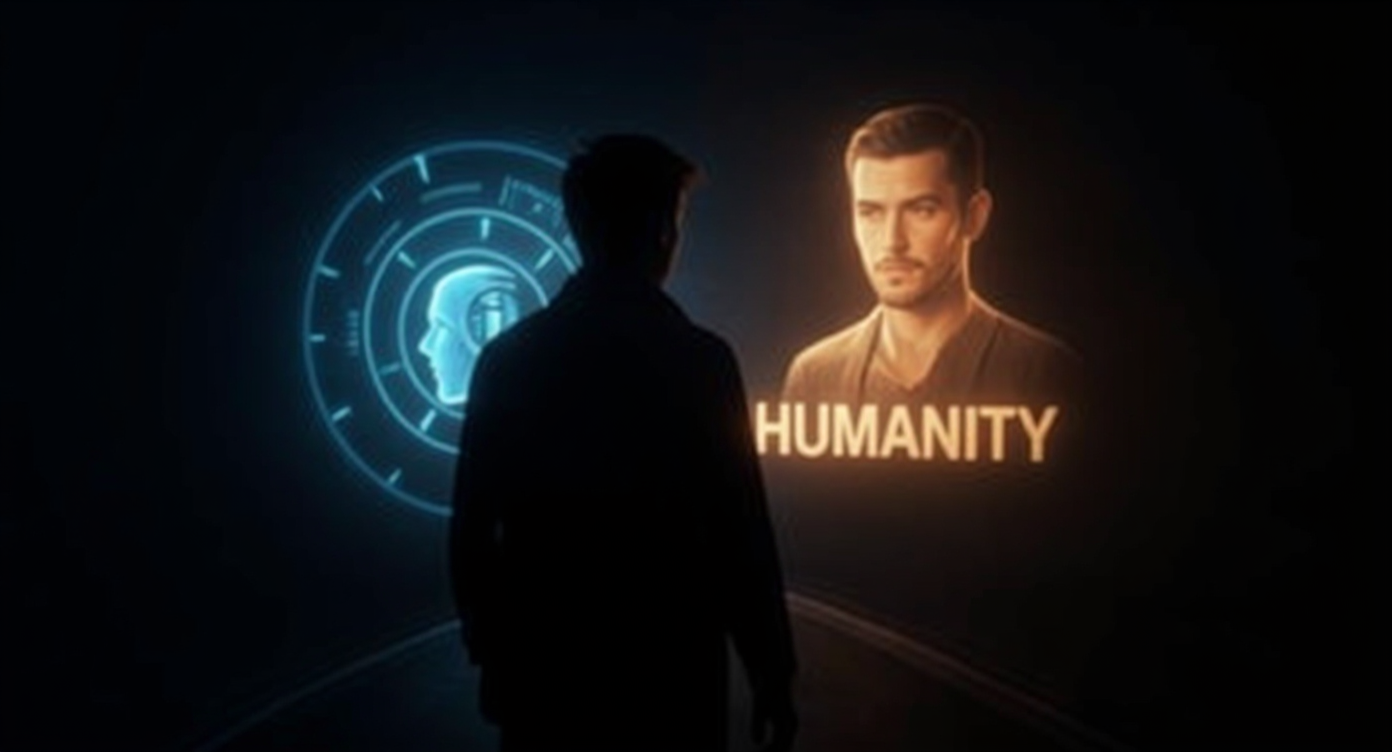
AI challenges us to become more intentional. If machines can produce more, humans must ask better questions about why we produce at all. If machines can imitate language, humans must speak with more truth. If machines can predict behavior, humans must defend freedom, dignity, and conscience.
This is the part of the journey that feels most dramatic to me. Not because the machines are rising in some movie-script way, but because we are being asked to rise. The test is ours.
What I Believe About the Future of AI and Human Collaboration
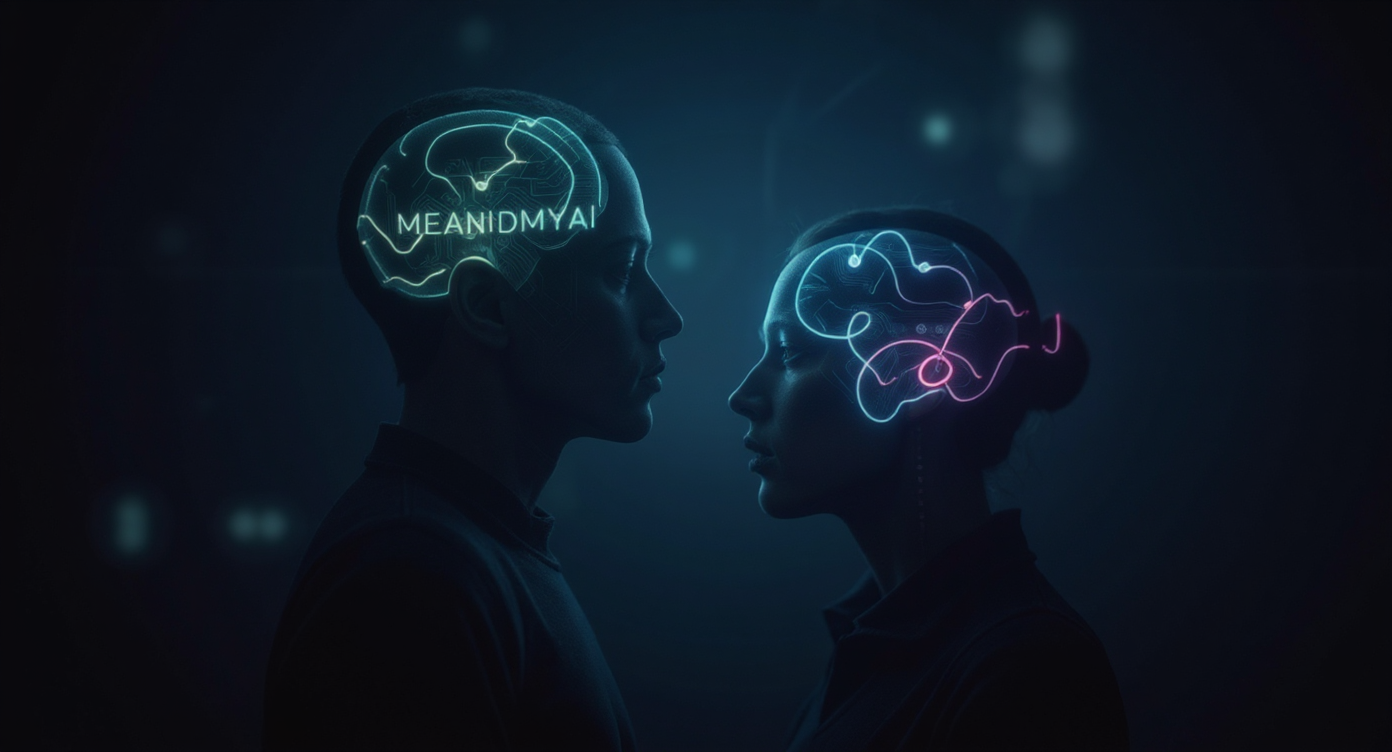
I don’t believe the best future is human versus machine. I also don’t believe in surrendering human authority to systems we barely understand. The future I believe in is partnership with guardrails, transparency, and moral purpose.
In that future, AI handles some of the load so people can spend more time on judgment, care, imagination, and service. It helps doctors read patterns, helps teachers reach different learners, helps small teams build with fewer barriers, and helps communities organize knowledge that might otherwise stay scattered.
But collaboration must never become dependency without awareness. We need people who can question outputs, inspect incentives, protect privacy, and recognize when a tool is shaping behavior in ways we didn’t consent to.
What I’m Still Learning
I’m still learning how to balance wonder and caution. Some days, the promise of AI feels bright enough to pull whole communities forward. Other days, I feel the shadow of misuse, bias, distraction, and control.
Both reactions are honest. Both belong in the conversation.
The work now is not to pick a simple side. The work is to become the kind of people who can build, use, teach, and govern AI without losing our moral center. That means listening to technologists, educators, artists, parents, faith voices, young people, and communities that are too often treated as afterthoughts.
A Personal Commitment
My commitment is to keep walking this path with open eyes. I want to keep learning the tools, but I also want to keep asking the harder questions. Who are we becoming as we use them? What habits are we forming? What kind of future are we rehearsing every time we choose convenience over conscience?
AI has taught me many technical lessons, but the most lasting ones are human. Be clear. Be careful. Be curious. Stay rooted. Don’t confuse a convincing answer with a true one. Don’t let speed steal reflection. Don’t let innovation outrun love.
That is where I stand now, somewhere between awe and responsibility. The machine is here. The future is not yet fixed. And the human heart still has work to do.