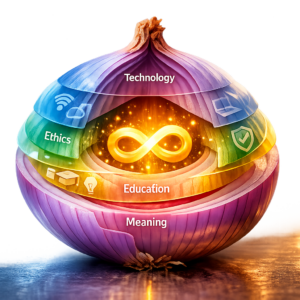
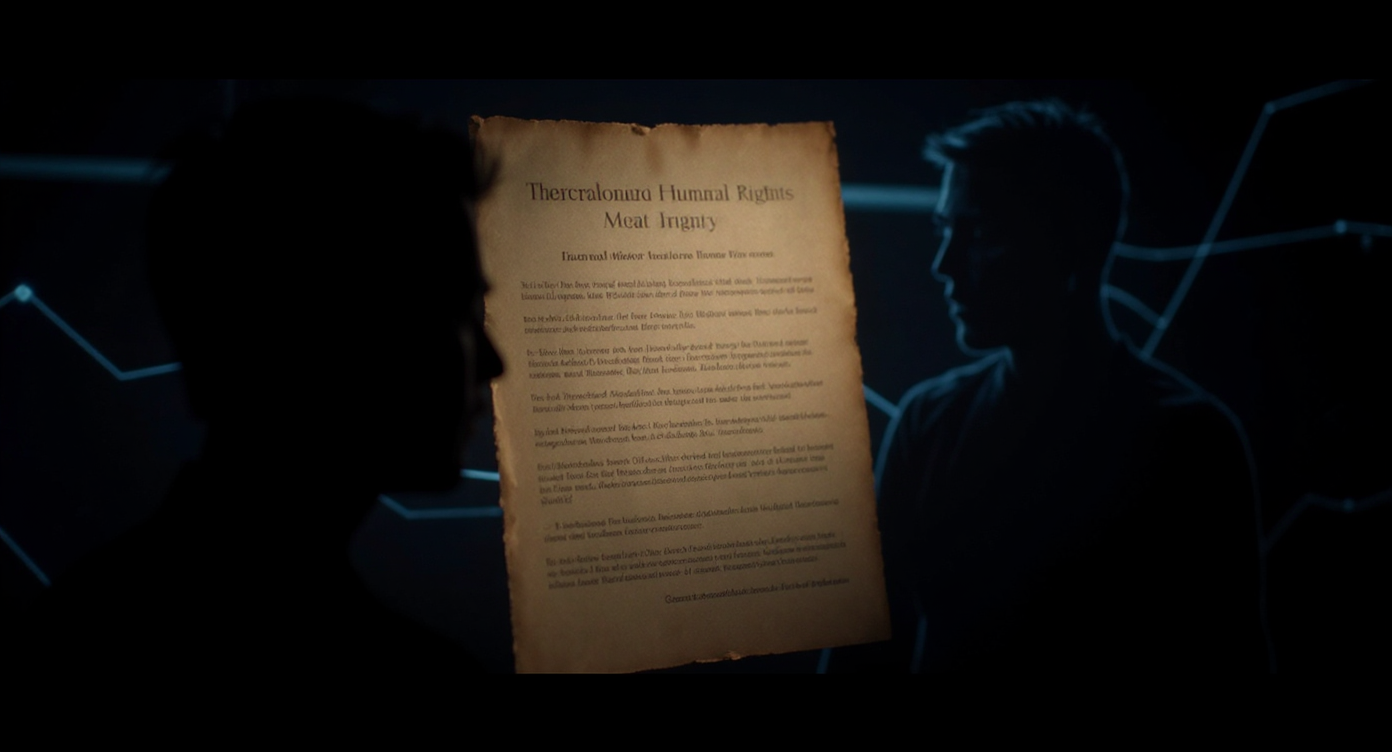
The Universal Declaration of Human Rights of 1948 still matters because it reminds us that dignity is not earned by status, wealth, attention, or usefulness. It belongs to every person, and in the age of AI, data, pressure, and distraction, that reminder has become personal again.
I am writing this as MEANDMYAI, not to point fingers, not to stir a political argument, and not to condemn anyone. I am writing because many people are carrying pain quietly, and silence can make a person believe they are alone when they are not.
What 1948 Still Whispers to Us
When the Universal Declaration of Human Rights was adopted in 1948, it was written with the memory of human suffering still close enough to touch. It did not read like a luxury document. It read like a line drawn in the moral ground.
It said, in clear human language, that people matter. Not some people. Not powerful people. Not polished people. People.
That truth can sound simple until life gets loud.
Bills arrive. Screens flash. Systems ask us to prove ourselves again and again. Jobs change. Families strain. Young people grow up watching adults survive more than live. The world keeps moving, and a quiet kind of ache can become normal.
Sometimes the danger is not that we forget human rights in a dramatic way. Sometimes we forget them one small compromise at a time.
The Pain Many People Don’t Announce
Not every wound is visible. Some people are grieving while answering emails. Some are afraid while making dinner. Some are ashamed because they can’t explain why they feel exhausted. Some are teenagers trying to make sense of their worth through numbers on a screen.
And some are smiling because that is what survival taught them to do.
If that is you, I want to say this plainly: you are not alone. Your pain does not need to be public to be real. Your dignity does not shrink because you are tired, behind, confused, underpaid, unseen, or rebuilding.
Human dignity is not a reward for holding everything together.
A person should never have to become profitable, popular, or perfectly productive before we recognize their humanity.
How We Miss What Is Right Under Our Nose
Greed is not always loud. Sometimes it looks like endless wanting. More reach. More data. More control. More proof that we are winning. When that hunger becomes the room we live in, we can stop noticing who is being squeezed.
Survival pressure does something similar. When people are fighting to keep the lights on, they may not have the strength to question the systems around them. They may see harm and think, I can’t deal with that right now. They may tell themselves, this shall pass.
Sometimes it does pass. Sometimes it doesn’t. Sometimes that phrase becomes a blanket thrown over a fire.
Digital systems can make this worse. They can turn people into profiles, scores, segments, clicks, and predictions. A person becomes a pattern. A child becomes a target market. A private struggle becomes data. The human face disappears behind the dashboard.
Distraction helps the forgetting. Ego helps too. Ego says, if I am comfortable, the problem must not be serious. Ego says, if I worked hard, everyone else should simply work harder. Ego says, if I didn’t mean harm, no harm happened.
But dignity asks for more than intent. It asks for attention.
Youth Are Watching the Patterns We Repeat
Young people do not only inherit technology. They inherit habits.
They watch how we speak to one another when we disagree. They watch whether we protect privacy or trade it away because it is convenient. They watch whether education is treated as a right or a prize. They watch whether we build tools that serve people or tools that quietly train people to serve the tool.
We cannot ask youth to build a better future while handing them the same old patterns with newer screens.
Some inherited patterns need to break. The pattern of silence when someone is hurting. The pattern of chasing success while neglecting character. The pattern of calling people lazy before asking what weight they are carrying. The pattern of treating data as harmless because it is invisible.
New patterns can be formed, but only if we admit the old ones exist.
AI With a Human Conscience
AI is not separate from human rights. It is already touching education, hiring, health, creativity, communication, finance, and the way people see themselves. That means ethical AI cannot be a slogan kept for panels and press pages. It has to live in choices.
Who is included in the design?
Who is protected when mistakes happen?
What data is collected, and why?
Can a person understand how a system affects them?
Can they say no without being punished?
These questions are not anti-technology. They are pro-human. They are the questions that keep innovation from becoming extraction.
I believe AI can help people learn, create, organize, heal, and be heard. I also believe that without moral clarity, powerful tools can copy old injustices at a faster speed. That is why the conversation has to stay close to dignity.
Privacy Is Not Paranoia
Data privacy is often treated like a technical preference, but it is closer to personal safety than many people realize. A person’s search history, location, voice, face, learning patterns, health concerns, family situation, and fears can tell a story they never agreed to share.
Privacy gives people room to grow without being permanently trapped by a moment. It gives youth space to make mistakes without being packaged forever. It gives families, students, workers, and creators a measure of control over their own lives.
When we protect privacy, we are not hiding from progress. We are refusing to let progress strip people down to usable parts.
Education Access Is a Dignity Issue
Education should not depend only on zip code, income, device quality, disability status, language, or whether a student happens to have an advocate in the room. Access to learning is one of the cleanest ways to honor human potential.
AI can support that access if used with care. It can translate, explain, tutor, adapt, and help learners find confidence again. But it must not replace human concern. It must not widen gaps by giving the best support only to those who can pay most. It must not turn students into tracked behavior files before they even understand what data means.
The goal should not be smarter systems alone. The goal should be wiser communities.
Safe Digital Ecosystems Are Built, Not Assumed
A safe digital space does not happen by accident. It takes rules, design choices, accountability, and people willing to ask uncomfortable questions before harm becomes normal.
- Can a young person use the platform without being pushed toward shame?
- Can a creator share work without losing ownership of their identity?
- Can families understand what is being collected and how it is used?
- Can people report harm and be treated like they matter?
- Can technology support mental health instead of feeding comparison and fear?
These are not small details. They shape how people feel when they log off. They shape what a child thinks they are worth. They shape whether a person feels seen or studied.
Responsibility Begins Close to Home
It is easy to talk about humanity as a global idea. It is harder to practice it at home, at work, in a classroom, in a group chat, in a design meeting, or inside our own mind.
Responsibility begins when we stop pretending that harm only counts when it is public. It begins when we check on the quiet person. When we slow down before judging. When we question a convenient system. When we teach youth that their value is not tied to performance metrics. When we build technology that remembers a human being is on the other side.
For anyone following this MEANDMYAI journey, I keep a simple path for updates and reflections here: MEANDMYAI Link in Bio. It is part journal, part signal flare, part reminder that technology and heart should not be separated.
A Human Promise for the Digital Age
The Universal Declaration of Human Rights does not need to be treated like a museum piece. It can be read as a mirror.
Do we still believe every person has dignity when they are poor, angry, disabled, undocumented, addicted, young, old, grieving, unknown, or hard to understand?
Do we still believe people deserve privacy when data is valuable?
Do we still believe education should open doors, not sort children into futures too early?
Do we still believe technology should serve life, not replace our responsibility to one another?
I do.
Not perfectly. Not without struggle. But I believe it enough to keep saying it, writing it, building around it, and checking myself when comfort makes me careless.
If you are carrying something heavy, may this be a small reminder that your life is not a footnote. If you are building something powerful, may you build it with a conscience. If you are young and watching the adults around you, may you know that some of us are trying to break the patterns we inherited.
Human dignity was never meant to be optional. Not in 1948. Not now. Not in whatever comes next.
Stay Fierce!